
The short answer: match the plant app to the job
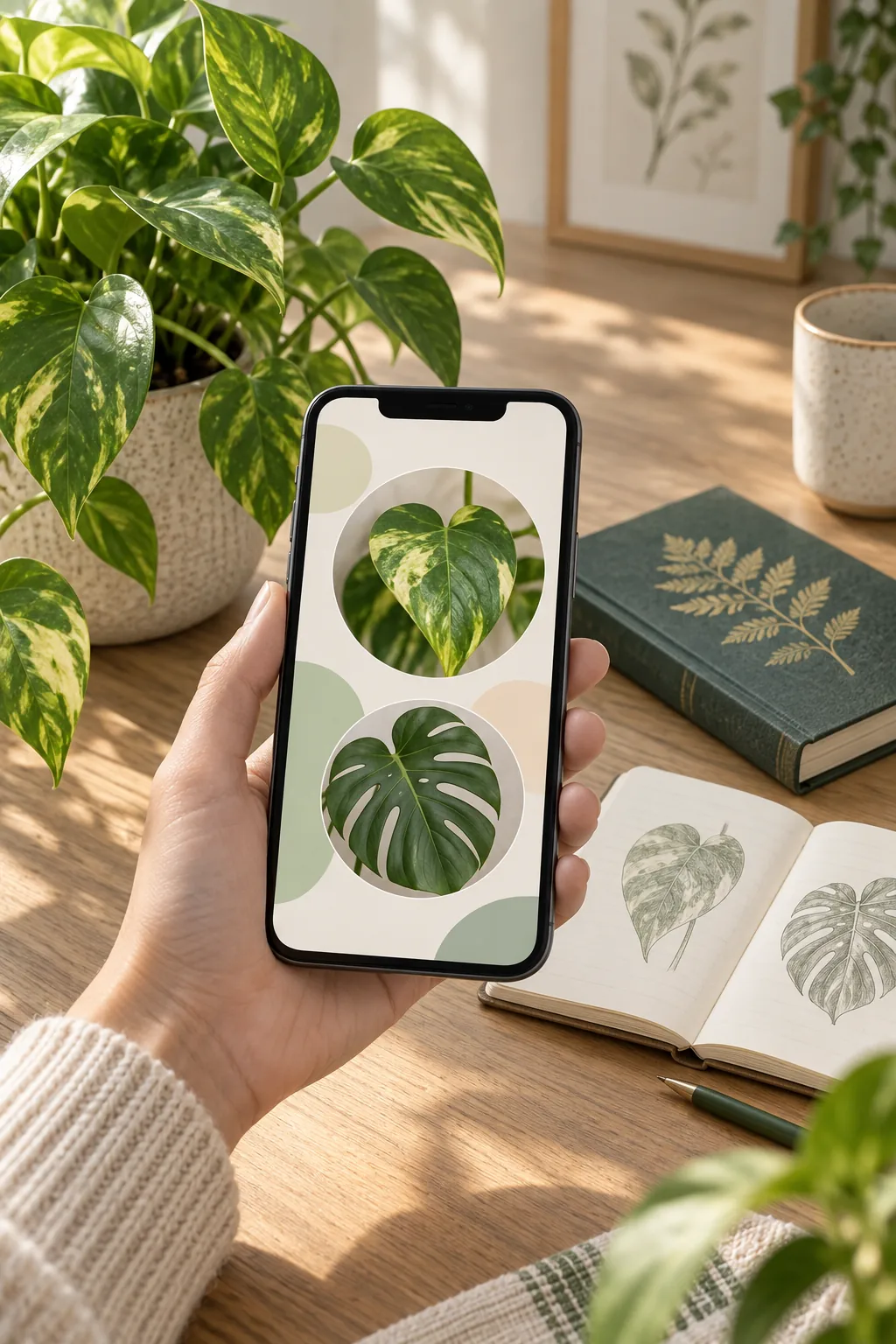
For a one-time question, start with a plant identifier app or browser workflow that lets you see the upload steps, sample result, and access terms before you commit. A no-download page is often the fastest way to learn whether the result contains a likely name, scientific name, care context, lookalikes, or only a visual guess.
For repeated garden records, choose a plant identification app with a history you can search, a clear export or account policy, and a way to correct a weak match. For wild plants or safety-sensitive questions, use the app as a first clue and keep a local field guide, biodiversity reference, or qualified source available for verification.
- Choose a browser tool when you want a quick lookup without another installation or permission request.
- Choose a dedicated app when saved history, reminders, offline access, or frequent scans genuinely matter.
- Choose a community or field reference when you need regional context, observations, and visible evidence.
- Choose a second source whenever the plant might be toxic, edible, invasive, irritating, or unsafe for a pet.
- Treat a photo result as a likely match until the visible traits and location support it.
Compare plant identifier apps with browser tools and references
The best plant identification app for one person can be the wrong tool for another. A dedicated app is convenient for repeated use, but a browser-first workflow reduces setup when you only have one photo. A community reference can offer better regional context, while a general visual search is useful for discovery but may not explain botanical traits.
Use this comparison as a decision framework rather than a permanent ranking. Access rules, supported regions, free limits, and model behavior change. Your photo, the plant category, and the consequence of being wrong should guide how much verification you add.
| Approach | Best fit | Strength | Check before relying on it |
|---|---|---|---|
| Plant identifier app | Frequent home or garden lookups | History, reminders, and a repeatable scan flow | Free scans, permissions, storage, and cancellation terms |
| Browser plant identifier | One-off questions or shared devices | No download and a quick way to preview the workflow | Whether a live result needs sign-in or credits |
| Pl@ntNet or a similar plant reference | Learning and plant-focused research | Botanical context and a deeper comparison path | Region, image quality, and species-level evidence |
| iNaturalist or Seek | Community observations and nature study | Useful location and natural-history context | A community suggestion is not automatic confirmation |
| Google Lens or visual search | A broad first clue | Fast discovery across many image types | Similar pictures can create false confidence |
Choose the best plant identifier app for your use case
Start with the question behind the image. If you bought an unlabeled houseplant, you may only need a likely name and basic care clues. If you are cataloging a garden, a searchable history and consistent naming matter more. If you are hiking, regional coverage, offline notes, and a way to save a location can matter more than a decorative interface.
The right choice also depends on the cost of a wrong answer. A casual identification can tolerate a shortlist. A plant near a pet, a wild edible, or a suspected invasive species needs a second source and a cautious decision boundary.
- Houseplants: prioritize clear leaf photos, care context, lookalike notes, and a way to save the result.
- Garden planning: compare history, export, reminders, and whether names stay consistent across scans.
- Outdoor learning: look for regional observations, seasonal context, and offline or low-signal support.
- Flowers and trees: use a category-aware workflow that requests the bloom, bark, fruit, or whole-plant view.
- Weeds and unknown wild plants: avoid touching an unfamiliar specimen and verify the result with a local reference.
- Pet or child safety: treat the app as triage only and confirm toxicity with an authoritative local source.
Photo quality usually matters more than adding another app
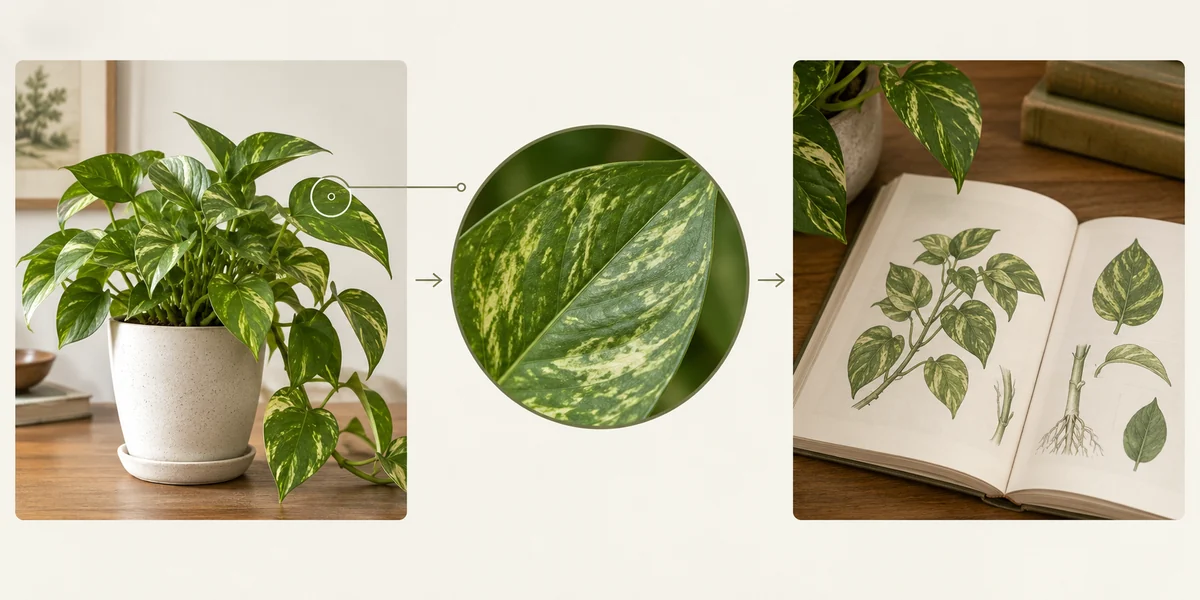
A plant ID app cannot recover details that the camera never captured. Before testing a longer list of services, improve the evidence. Use soft daylight, keep the subject sharp, and make the leaf, flower, bark, fruit, or stem large enough to inspect. Avoid filters, glare, heavy shadows, and a busy background that hides the edge of a leaf.
A useful upload often combines two views: a whole-plant photo for growth habit and a close detail of the feature that separates the top lookalikes. If the first result is uncertain, take a better second photo instead of treating another identical angle as independent confirmation.
- Leaf: show outline, edge, veins, texture, and how it attaches to the stem.
- Flower or fruit: include the center, arrangement, color pattern, and a sense of scale.
- Tree or shrub: add bark, branching, and a whole-plant view instead of only a distant canopy.
- Weed or groundcover: show the rosette, stem, setting, and growth habit without handling an unknown plant.
- Second angle: photograph the exact trait that separates the two most likely matches.
Privacy, subscriptions, and accuracy limits
Photo identification is a probability-based shortcut, not a laboratory confirmation. Young plants may not show mature traits, unrelated species can share a leaf shape, and a single angle can hide the feature that matters. A careful app makes uncertainty visible and tells you what evidence would improve the next attempt.
Read the access wording before submitting a real image. Free to install, free to try, a free preview, and free live scans are different offers. Check whether a trial renews, how credits are counted, whether uploads are stored, and how you can delete an account or image. These details often matter more than a feature list.
Do not use a plant identifier app as the only basis for eating a wild plant, treating a medical problem, handling an irritating species, choosing a pesticide, or deciding whether a plant is safe for a pet. Confirm a safety-sensitive question with qualified local guidance and the relevant authoritative source.
- Treat the first name as a likely match and compare the visible traits yourself.
- Check permissions, image retention, account deletion, export, and subscription cancellation before regular use.
- Use a second source for toxicity, edibility, invasive-plant, or medical decisions.
- If the result lists lookalikes, photograph the distinguishing trait instead of choosing the first label automatically.
- Keep current pricing and access terms in mind because app limits can change.
Use the Plant Identify page that matches your next question
An app comparison helps you choose a starting point, but your next step should match the task. Plant Identify keeps browser access, photo lookup, category pages, and care guidance separate so you can move to the relevant workflow without repeating the same search.
If you are still deciding, begin with the no-download workflow and use the result as a starting point. Then open the category or care page that fits the likely plant and the decision you need to make.
Best Plant Identifier App FAQs
What is the best plant identifier app?
The best choice depends on the job. A browser tool is often enough for one lookup, while a dedicated app is more useful for saved history, reminders, offline notes, or repeated scans. Compare the result detail, uncertainty language, privacy terms, and free limits before choosing.
Is a plant identification app better than a browser tool?
Neither is always better. An app can make repeated scans and history easier, while a browser workflow avoids installation and is convenient on a shared device. For a one-off question, the browser may be the simpler choice.
What is the best plant identifier app for iPhone?
There is no universal winner for iPhone. Choose a workflow with clear photo guidance, useful result detail, transparent subscription terms, and controls for saved images. If you only need one answer, try a no-download browser workflow first.
What is a good plant identifier app for Android?
Look for the same fundamentals on Android: a clear camera or upload path, likely matches with visible reasoning, history controls, understandable permissions, and honest free-scan limits. Your photo quality and the plant category still affect the result.
Can I identify a plant without downloading an app?
Yes. A browser-based plant identifier can handle a single lookup on a phone, tablet, or desktop. Check the current access rules, use a sharp photo, and keep a second reference nearby when the answer affects safety or treatment.
How accurate are plant identifier apps by photo?
Accuracy varies with the species, the photo, the region, and the number of lookalikes. Use a whole-plant view plus a close detail and treat the result as a likely match. A confident label is not proof when the decision is safety-sensitive.
Helpful official references
- Pl@ntNet — Official plant-focused reference and identification project.
- iNaturalist — Official community platform for nature observations and species learning.
- Google Lens — Official visual-search entry point for broad image-based lookups.
The practical verdict
The best plant identifier app is the one that fits how often you identify plants, how much context you need, and how serious a wrong answer would be. Start with a transparent browser or app workflow, use a clear photo, and look for uncertainty and next-step guidance instead of a bare label.
For repeated garden use, compare history, privacy, offline access, and subscription limits. For wild or safety-sensitive plants, add a second local or professional source. The app is a useful shortcut, but the evidence and your decision boundary still matter most.
Try Plant Identification Online