Peace Lily Care: Watering, Light, Soil, Blooms, and Brown Leaves
Peace lily care is easiest when you balance bright filtered light with evenly moist—but never constantly soggy—soil. This practical indoor guide explains what to check before watering, repotting, feeding, or treating a drooping plant.
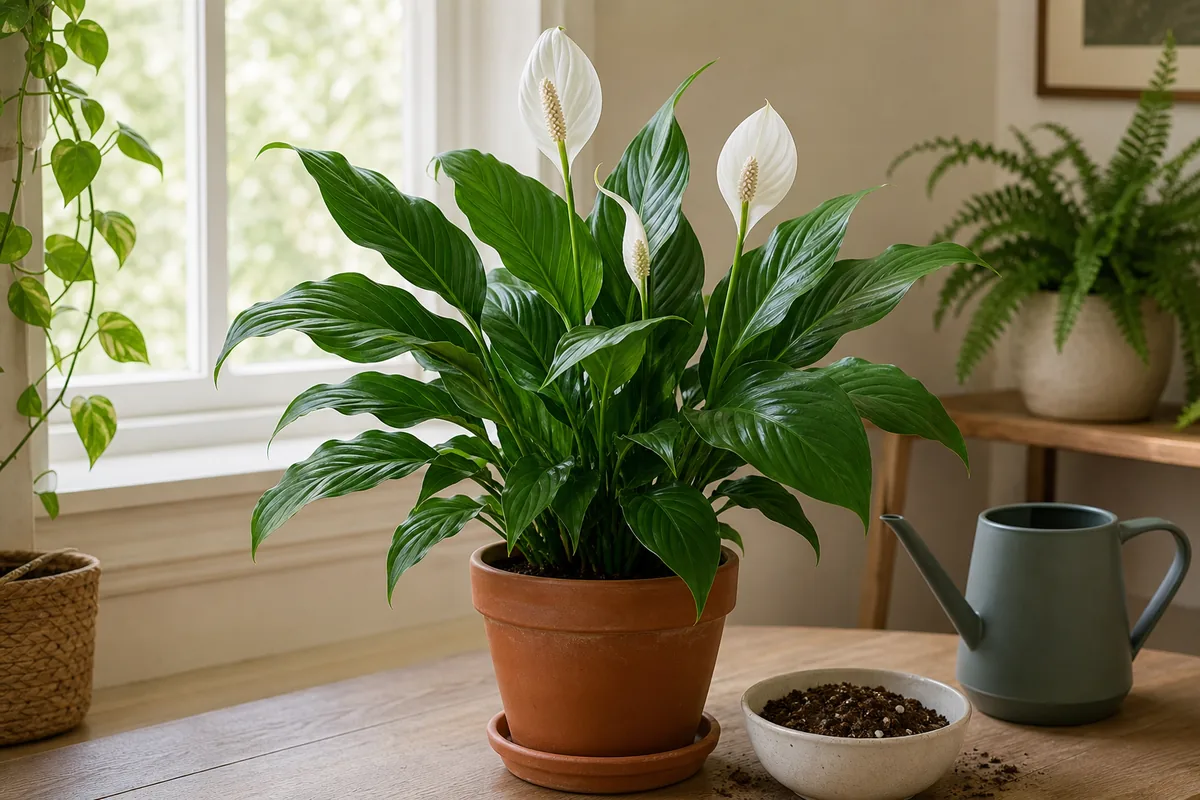
Peace lily care at a glance
For dependable peace lily care indoors, place Spathiphyllum in bright indirect light, protect it from harsh midday sun, and water thoroughly when the upper inch of mix feels dry or the pot becomes noticeably lighter. Let excess water drain and empty the saucer. Use an airy, moisture-retentive houseplant mix in a pot with drainage, keep temperatures stable, and feed lightly during active growth. A peace lily may droop when thirsty, but repeated dramatic wilting stresses roots and does not prove that every droop needs more water. Check soil moisture, drainage, roots, temperature, and light before acting.
Indoor peace lily care checklist
Read the leaves, pot, roots, and room together. Light and temperature change how quickly the mix dries, so a calendar cannot replace a moisture check.
Light and placement
Look for
Few flowers, slow growth, very dark stretched foliage, or soil that stays wet for many days can indicate insufficient light. Pale bleached patches or crisp tan areas may follow direct hot sun.
First action
Choose bright filtered light near an east or north window, or set the plant back from stronger glass. Move it gradually and rotate the pot for balanced growth.
Watering and drainage
Look for
A light pot, slightly soft leaves, and dry upper mix suggest watering may be due. Persistent wetness, yellow leaves, fungus gnats, sour odor, or soft dark roots suggest excess moisture.
First action
Check about an inch below the surface, water the whole root ball, let it drain fully, and empty the saucer. Do not keep the nursery pot standing inside water.
Soil and pot size
Look for
Compacted mix, water running around a dry root ball, roots circling tightly, or soil that remains saturated makes care unreliable.
First action
Use a loose mix that holds some moisture while admitting air, such as houseplant mix amended with bark and perlite. Repot only one size up into a pot with drainage.
Temperature and humidity
Look for
Brown edges, curled foliage, stalled growth, or sudden drooping can follow heater air, air-conditioning, cold glass, or abrupt room changes.
First action
Keep the plant in a comfortably warm, stable room away from drafts. Moderate household humidity is usually workable; a humidifier helps more reliably than constant misting in very dry air.
Feeding and flowering
Look for
Healthy leaves with no blooms usually point first to low light, recent stress, immaturity, or seasonal growth—not an urgent fertilizer shortage.
First action
Improve usable light, then apply a diluted balanced houseplant fertilizer during active growth. Avoid heavy feeding, which can burn roots and brown leaf tips.
Pests and household safety
Look for
Cottony clusters, scale bumps, sticky residue, fine webbing, or distorted new leaves need inspection. Chewed foliage creates a separate child or pet concern.
First action
Isolate and inspect both leaf surfaces before treatment. Keep peace lily out of reach because chewing it can cause painful mouth irritation.
A 7-step peace lily care routine
Follow this order for a new plant or a peace lily that has started drooping, yellowing, or losing flowers. Change one major condition at a time so you can see what helps.
-
Confirm that the plant is Spathiphyllum
Peace lilies grow glossy lance-shaped leaves from the base and produce a white or greenish spathe around a central spadix. Anthurium, calla lily, and some young foliage plants can be confused in a quick photo. Confirm the whole plant before following species-specific advice.
-
Set light before setting a watering rhythm
Bright indirect light supports stronger leaves and more blooms, while low light slows water use. A plant moved deeper into a room usually needs less frequent watering even if its pot and soil have not changed.
-
Check moisture below the surface
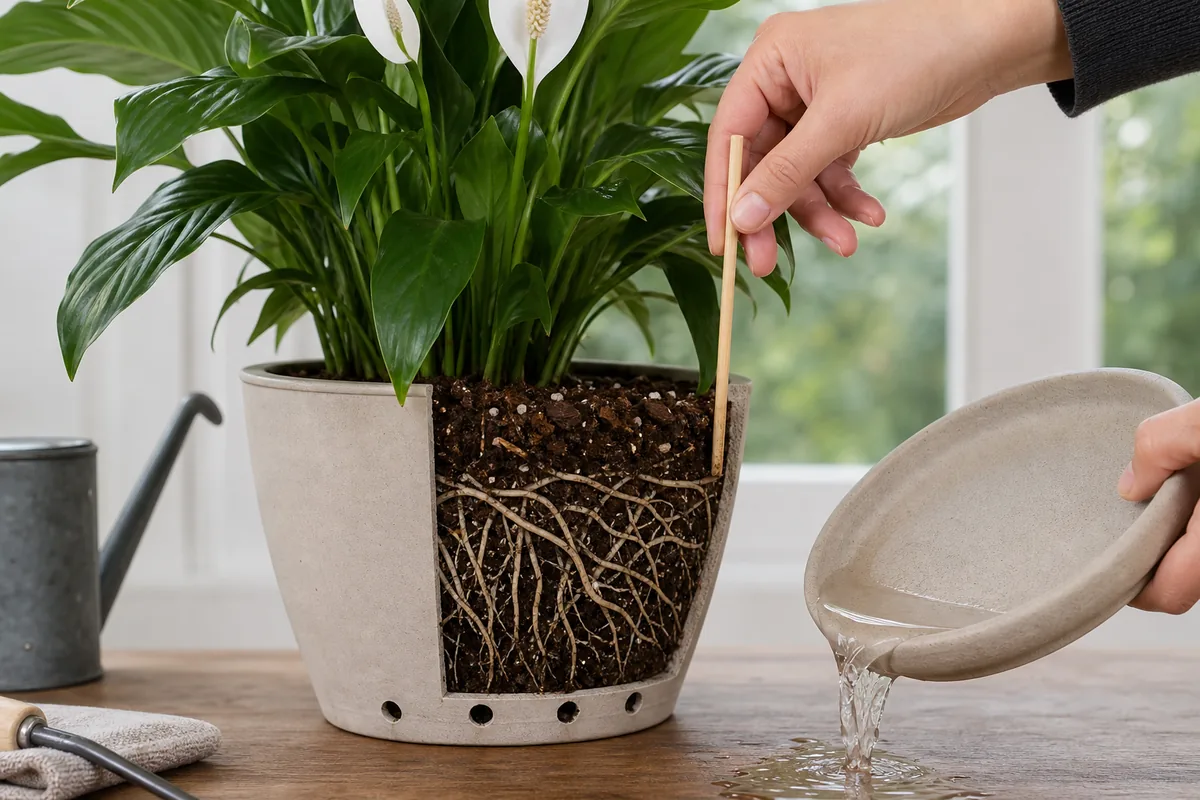
Touch the upper inch of mix, use a plain wooden stick, and lift the pot to learn its lighter dry weight. Water when the upper layer has dried but the root ball is not repeatedly collapsing into a severe wilt.
-
Water thoroughly, then drain
Pour slowly across the surface until water exits the drainage hole. Let the pot finish draining and empty the saucer or decorative cachepot. Small daily sips can leave part of the root ball dry while salts collect in the mix.
-
Keep the root zone airy
Peace lilies like more even moisture than many succulents, but roots still need oxygen. Loosen a dense mix with bark or perlite and avoid oversized pots whose center stays wet long after the surface dries.
-
Feed gently and clean the foliage
Use a diluted balanced fertilizer when the plant is actively making leaves. Reduce feeding during dark, slow winter growth. Wipe dust from leaves, and occasionally flush the mix with clean water if mineral salts collect.
-
Repot or divide only when justified
Repot when roots crowd the pot, the mix has collapsed, or watering becomes difficult. Divide a mature clump into sections with healthy roots and several leaves, then keep the new divisions evenly moist while they recover.
Peace lily problems: what to check first
| Peace lily symptom | Check first | Avoid this mistake |
|---|---|---|
| Plant suddenly droops | Check soil moisture at root depth, pot weight, room temperature, and whether roots are sitting in drained water. | Adding water automatically when the mix is already wet. |
| Yellow lower leaves | Look for saturated soil, poor drainage, old-leaf aging, cold stress, or damaged dark roots. | Fertilizing before ruling out root stress. |
| Brown tips or edges | Review long dry spells, low humidity, salt buildup, excess fertilizer, hot sun, and inconsistent watering. | Cutting every leaf and continuing the same root-zone routine. |
| No flowers | Increase bright indirect light, confirm stable care, and allow time for a mature plant to enter active growth. | Using strong bloom fertilizer in a dark location. |
| Black or mushy roots | Remove the plant, trim dead tissue with clean tools, and repot firm healthy roots in fresh airy mix. | Returning damaged roots to the same saturated soil and oversized pot. |
| Green flowers | Recognize that older spathes often turn green; also review light and avoid excessive nitrogen feeding. | Treating a naturally aging spathe as a disease. |
Peace lily or a look-alike? Identify before changing care
Peace lily, anthurium, calla lily, and some broad-leaved houseplants can look similar in a cropped photo. Include the whole growth habit, the leaf-stem connection, the pot, and any flower structure when using a plant identifier. Identification matters because a calla lily may follow a different seasonal cycle, while anthurium usually prefers a somewhat airier aroid mix. A clear match also prevents normal green spathes or pollen structures from being mistaken for disease.
Not sure it is a peace lily?
Upload clear photos of the whole plant, one leaf, the stem base, and any flower before changing the pot or treatment plan.
Identify Your Plant