Calathea Care: Light, Watering, Humidity, and Leaf Curling
Good Calathea care comes from steady conditions rather than a rigid calendar. This indoor guide explains how to balance filtered light, even moisture, airflow, humidity, and root health before you react to curled or brown leaves.
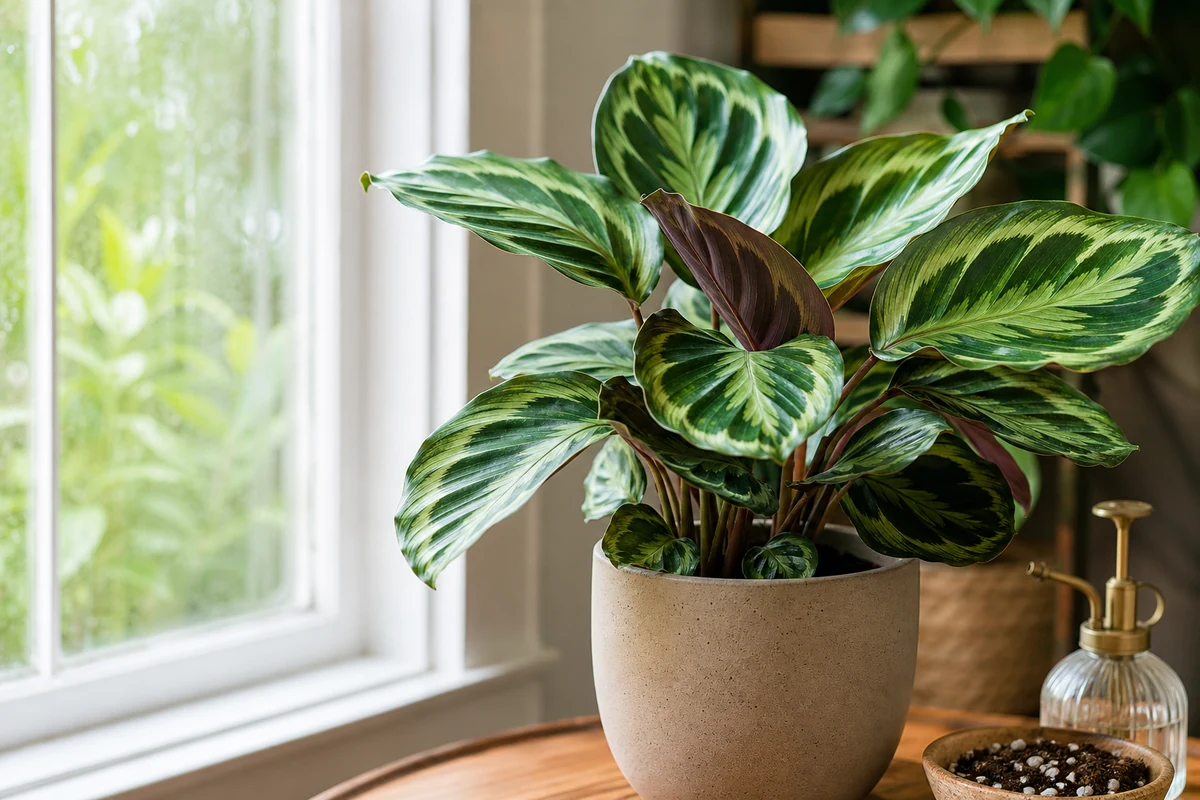
Calathea care at a glance
For reliable Calathea care indoors, place the plant in bright indirect or filtered light, keep the potting mix lightly and evenly moist without leaving the roots submerged, and protect it from hot glass, cold drafts, and heater blasts. Use a loose mix in a pot with drainage, increase room humidity when the air is very dry, and feed lightly during active growth. If leaves curl, check light, moisture, temperature, and pests together instead of adding water automatically.
Indoor Calathea care checklist
Read the leaves, pot, soil, and room as one system. The same watering schedule can be too much in a dim room and too little in bright, warm conditions.
Light and placement
Look for
Faded patterns, slow growth, or long weak stems can follow low light. Bleached patches, crisp edges, or sudden pale areas can follow strong direct sun through glass.
First action
Choose bright filtered light near an east window or behind a sheer curtain. Move the pot gradually and keep leaves away from hot glass.
Water and drainage
Look for
A dry upper layer and a light pot suggest watering may be due. Persistent wetness, fungus gnats, sour odor, yellowing, or soft roots suggest the mix is staying too wet.
First action
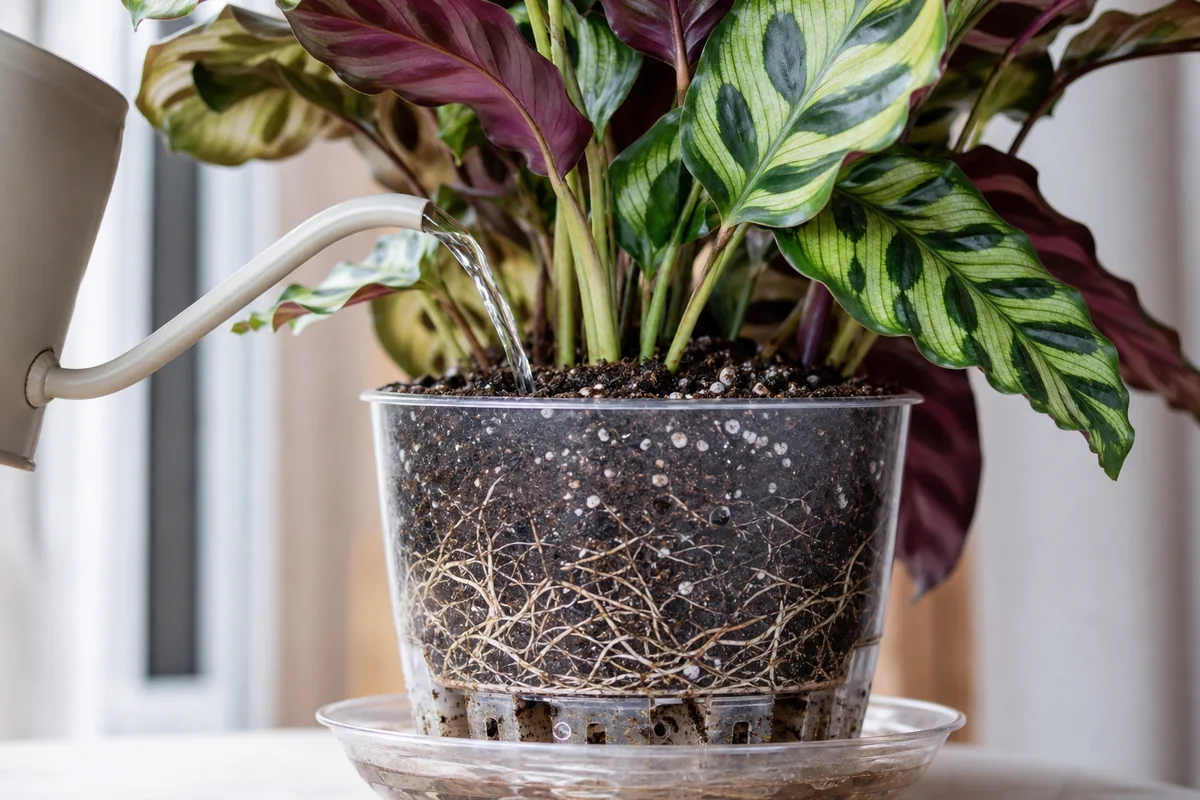
Check below the surface, water the root ball evenly, let excess water drain, and empty the saucer. Do not keep the nursery pot standing in water.
Humidity and air movement
Look for
Crisp margins, rolled leaves, and browning can become worse in very dry heated air. Stagnant wet foliage can create a different problem by encouraging fungal or bacterial damage.
First action
Use a humidifier or group plants when the room is dry, while keeping gentle airflow. Misting alone gives only a short-lived change and should not replace drainage.
Soil and pot size
Look for
Compacted mix, water running around a dry root ball, or a pot that stays wet for many days makes Calathea care unpredictable.
First action
Use an airy houseplant mix that holds some moisture but still drains. Repot only one size up into a container with a drainage hole.
Temperature and drafts
Look for
Sudden curling, drooping, or damaged edges can follow cold windows, air-conditioning, heater air, or repeated moves between rooms.
First action
Keep the plant in a stable, comfortable room away from vents and cold glass. Change one condition at a time so the response is easier to read.
Feeding and leaf cleaning
Look for
Weak new growth may reflect low light, root stress, or the wrong season rather than an urgent fertilizer shortage. Dust can also hide pests and reduce the useful leaf surface.
First action
Feed at diluted strength during active growth, wipe leaves gently with clean water, and inspect leaf undersides before treating anything.
A 7-step Calathea care routine
Use this order for a new plant or one that has started curling, browning, or growing slowly. Stabilize the environment before making several changes at once.
-
Confirm the Calathea or Goeppertia
Trade names can be confusing, and Maranta, Stromanthe, Ctenanthe, and Calathea relatives may share patterned leaves. Photograph the whole growth habit, leaf undersides, stems, pot, and any flowers before applying species-specific advice.
-
Set the light first
Place the plant where it receives bright, indirect light for much of the day. Low light slows water use and growth, while direct midday sun can bleach or scorch patterned leaves. Adjust gradually rather than moving it repeatedly.
-
Check moisture below the surface
Touch the upper layer, use a plain wooden stick, and lift the pot to learn its lighter dry weight. Calatheas prefer more even moisture than many succulents, but the root zone still needs air between waterings.
-
Water thoroughly and drain
Pour slowly around the soil until the root ball is evenly wet, then let water leave the drainage hole. Empty a saucer or decorative cachepot. Small daily sips can leave dry pockets while the lower mix stays saturated.
-
Stabilize humidity and temperature
Keep the plant away from heater blasts, cold drafts, and sudden room changes. If the air is very dry, a room humidifier or a group of plants is more consistent than repeated misting. Do not place the pot in standing water.
-
Feed lightly and inspect leaves
Use a diluted balanced houseplant fertilizer during active growth and reduce feeding when growth slows. Wipe dust from broad leaves and inspect both sides for webbing, scale, mealybugs, or distorted new growth.
-
Repot only when the mix or roots need it
Repot when the mix has collapsed, drainage has changed, roots are crowded, or the plant dries far too quickly. Keep the new pot only slightly larger, avoid burying the crown, and allow the plant time to settle.
Calathea problems: what to check first
| Calathea symptom | Check first | Avoid this mistake |
|---|---|---|
| Leaves curling inward | Check dry soil, low humidity, hot sun, cold drafts, and pests before changing the watering schedule. | Adding repeated water when the mix is already wet. |
| Brown leaf edges | Review dry air, inconsistent moisture, salt buildup, direct sun, and root damage. Look at new leaves as well as old ones. | Trimming every leaf without fixing the root-zone or room condition. |
| Yellow leaves | Check whether one old leaf is aging naturally or several leaves are affected. Inspect drainage, light, roots, and pests. | Fertilizing before ruling out saturated soil or damaged roots. |
| Soft or dark roots | Remove the plant, inspect the root ball, cut only dead tissue with clean tools, and repot into fresh airy mix if necessary. | Returning rotting roots to the same compact, wet soil. |
| Sticky leaves or webbing | Isolate the plant and inspect leaf undersides, stems, and new growth for scale, mealybugs, or mites. | Spraying a stressed plant before identifying the pest and checking the product label. |
Identify the Calathea before changing care
Calathea, Goeppertia, Maranta, Stromanthe, and Ctenanthe can look similar in a cropped photo, while different cultivars can have very different leaf patterns. Upload a whole-plant view plus one close leaf, the stem base, pot, and leaf undersides. Our plant identifier can suggest a likely match and care direction, but confirm unusual or declining plants with a reputable nursery or local horticulture source.
Not sure which patterned plant you have?
Start with clear photos of the whole houseplant and one mature leaf. A likely name makes the next light, watering, and humidity decision more specific.
Identify a Houseplant